Project Overview
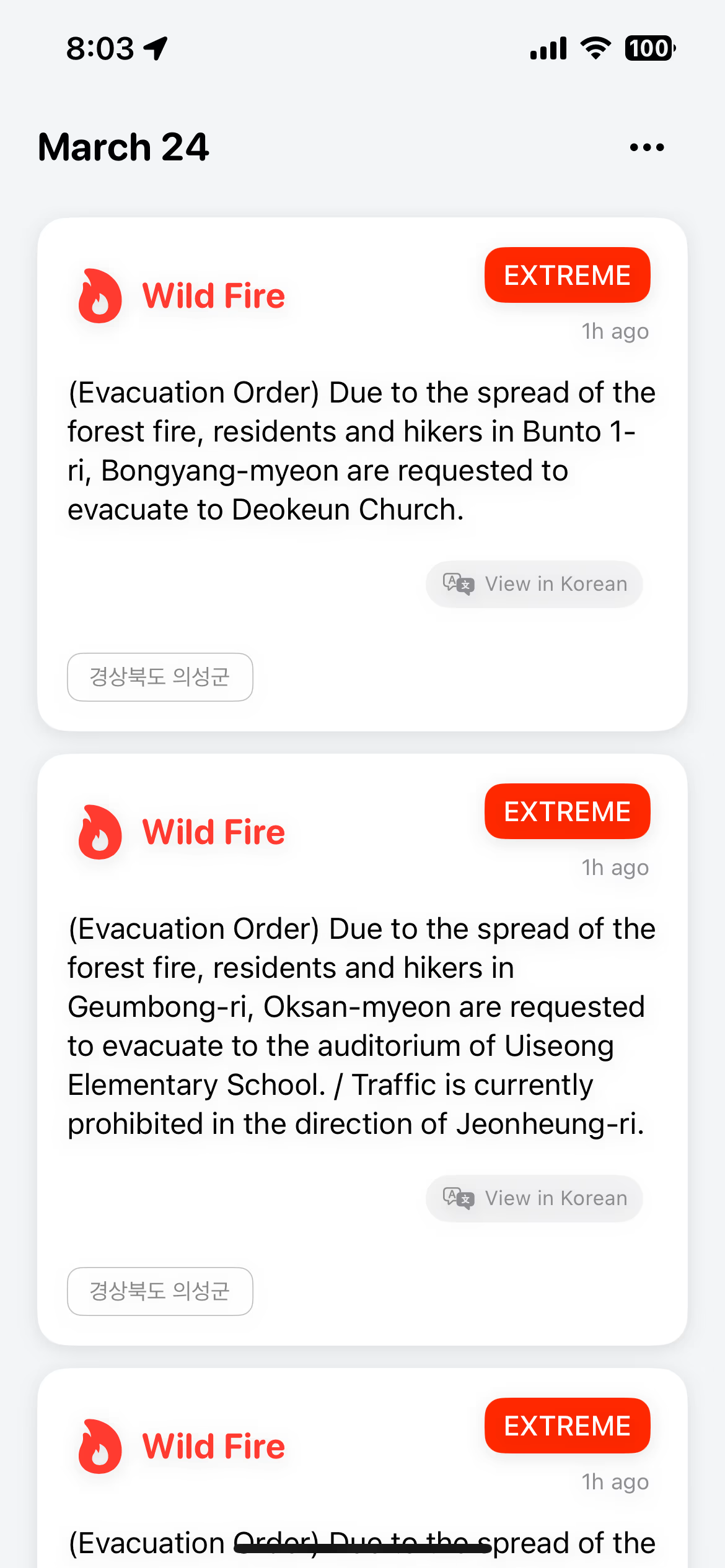
SafetyBird is an iOS app that provides real-time disaster information in South Korea in multiple languages (Korean, Japanese, and English).
In South Korea, disaster alerts are sent to mobile devices based on cell tower location during emergency situations, but these alerts lack accessibility for foreigners and visually impaired users. To address this issue, SafetyBird collects disaster information, processes it, and delivers safety information to users in a more accessible format through an iOS app.
Technologies Used
Backend
SafetyBird built its backend using a microservice architecture for enhanced service capabilities. The information collection module, Push Notification module, and REST API server were separated as independent services, deployed as Docker containers, and designed to communicate via HTTP.
- Information Collection Service: Real-time disaster information collection through a government contract
- Push Notification Service: Module that requests pushes to the APNS server based on urgency level
- REST API Server: Hono server for data exchange with clients (iOS)
- Data Management: MongoDB for storing unstructured data
For this project, TypeScript was used as the programming language with Bun as the runtime environment. For deployment, containers were deployed using OCI (Oracle Cloud Infrastructure) Compute environment.
iOS
The app was developed using SwiftUI with an MV architecture. SwiftData was utilized to store and manage disaster message data, while Firebase Analytics was implemented to analyze user behavior data for service improvements.
Problems Solved by Safety Bird
Limitations of Existing Disaster Alert Systems
After deciding to proceed with this project, I identified the following issues with the existing system:
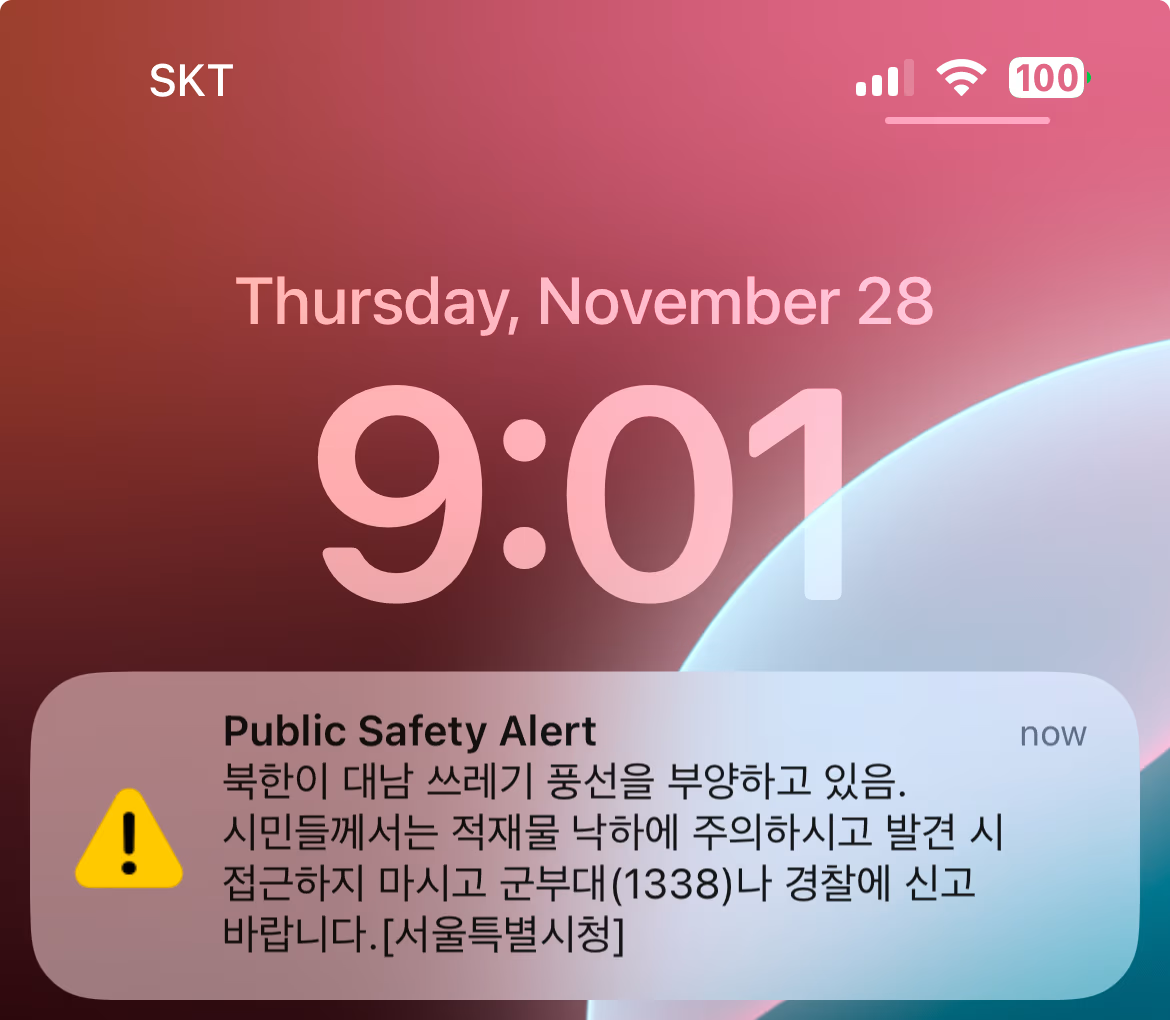
- Traditional disaster alerts are displayed only once, making it difficult for users to review information if they miss it initially.
- Information is provided only in Korean, making it challenging for foreign tourists and residents who don’t speak Korean to assess the severity of the situation or understand the message content.
- Lack of accessibility considerations for low-vision users and the visually impaired.
- No easy way to distinguish what type of warning the disaster message represents.
- Information is limited to specific regions, preventing people in other areas from accessing disaster alerts.
SafetyBird’s Solution
SafetyBird overcomes the limitations of the existing disaster alert system by establishing a server that processes disaster messages and provides information through a mobile app.
Real-time Disaster Information Collection and Delivery
The existing disaster alert system was provided only in Korean and sent as one-time messages through cell towers. To solve these issues, SafetyBird established a structure to collect real-time disaster information by obtaining official data access permission from the government.
This allows users to check disaster information in real-time within the app and review past disaster records as needed. Additionally, a push notification system based on urgency level was implemented to ensure users don’t miss important information.
AI-Based Real-time Multilingual Translation System
After collecting real-time disaster information using government source data, we implemented a feature that immediately translates it into English and Japanese using Google’s Gemini’s structured output capabilities.
In particular, SafetyBird applies an AI model that uses a specialized vocabulary frequently used in disaster alerts, rather than simple machine translation, to improve translation accuracy. This enhancement allows foreign tourists and residents to understand information more intuitively and respond appropriately.
Accessibility Features for Low-Vision and Visually Impaired Users
The existing disaster alert system wasn’t designed with visually impaired or low-vision users in mind. While iOS and Android support features like VoiceOver and Talkback function properly, the inability to access information on demand was a limitation.
SafetyBird supports seamless use of Apple’s VoiceOver functionality and Dynamic Type within the app.
Intuitive Design
We analyzed disaster data to classify incidents into 33 different types, each with appropriate icons and titles, designing a UI that allows users to intuitively understand the situation.
Future Improvements
Additional Language Support
- Measure current token consumption and evaluate translation performance before adding Chinese, Spanish, and other languages.
Personalized Alert Features
- Provide functionality that delivers customized information based on the user’s regions of interest and current location.
Expand Service Area to Japan
- Use L-Alert to make it easier for foreigners in Japan to access safety alert information.